ICRITR Students Receive Practical Training on Export Business as Prof. Sogbesan Takes Lead Session
Students of the Prof. Ngozi Eunice Egbuna International Centre for Regional Integration and Trade Research (ICRITR), Nnamdi Azikiwe University, Awka, on January 22, 2026, participated in an intensive seminar-class on Practical Export Business and International Trade, delivered largely by Professor Olusegun Oludapo Sogbesan, Founder and Director-General of the Onitsha Business School.
The session, which combined both physical and virtual participation, was structured more as a classroom engagement than a conventional seminar, allowing students to interact directly with real-world export concepts, case studies and market realities. While Professor Ngozi Eunice Egbuna, Founder of ICRITR, made brief contributions and moderated the session, the core teaching and practical exposition were led by Professor Sogbesan as a specially invited resource person.
In his lecture, Professor Sogbesan drew extensively from years of hands-on experience in international trade, export business development and entrepreneurship training. He exposed students to the fundamentals of export practice, stressing that export business is driven by structured processes, market intelligence and long-term planning rather than guesswork or government dependency.
Using practical examples across Africa, he explained how Nigerian-made products, including agricultural produce, processed foods, bottled water, cosmetics, snails and other finished goods, are already penetrating regional markets in West, East and Central Africa. He emphasized that Africa itself remains Nigeria’s most strategic export destination, especially under the African Continental Free Trade Area (AfCFTA).
Professor Sogbesan also educated students on the different pathways into export business, identifying manufacturing exporters, export merchants and export brokers as viable entry models depending on capital strength and expertise. He noted that export brokerage, in particular, allows individuals to participate in international trade without owning factories or handling goods directly.
A significant part of the session focused on value addition. Students were advised to prioritize finished and semi-finished products over raw materials, as value addition determines pricing power, sustainability and profitability. He cited high-value niche exports such as processed snail products, agricultural derivatives and consumer goods as examples of opportunities many Nigerians overlook.
Addressing challenges in Nigeria’s export ecosystem, Professor Sogbesan pointed to weak infrastructure, logistics bottlenecks, policy inconsistencies, lack of processing facilities and poor linkage between universities and industry. He criticized academic systems that focus mainly on theory, stressing that students must understand documentation, quality standards, market requirements and negotiation skills before venturing into export trade.
Commending Nnamdi Azikiwe University for its growing emphasis on practical scholarship and industry-relevant learning, Professor Ngozi Eunice Egbuna noted that UNIZIK has continued to provide a conducive academic environment for centres like ICRITR to bridge the gap between theory and practice. In her contributions, she reinforced the need for research-driven trade practices and reminded students that export success must be built on sound market understanding, institutional discipline and practical exposure. She reiterated ICRITR’s commitment to equipping students with applied knowledge that aligns academic learning with real economic activities.
The seminar-class also examined global best practices, including China’s export-led development strategy, where production, reinvestment and business discipline are aligned toward a single national economic goal. Students were encouraged to adopt a long-term mindset, focusing on building sustainable export businesses over five to ten years rather than seeking quick profits.
Participants, both on-site and online, described the session as eye-opening, noting that it provided clarity on how export business actually works beyond classroom theories. Many expressed appreciation for the practical approach adopted, which allowed them to see international trade and export business as an achievable career and business path.
The session ended with a call on students to shift from job-seeking orientation to value creation, leverage Africa’s vast markets, and actively prepare themselves to participate in regional and global trade through knowledge, discipline and persistence.
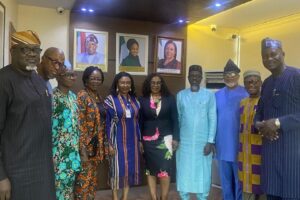
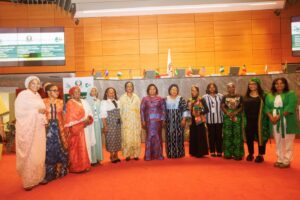
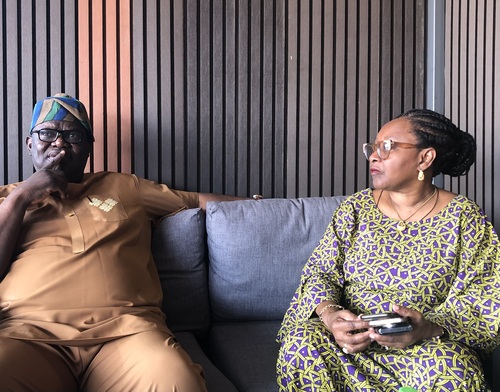
See photos: